B2B · Enterprise UX
Concept Redesign
Automotive

BMW Vehicle
Configurator
Redesign

The BMW online configurator is a critical conversion point — the digital bridge between desire and dealership. This self-initiated redesign concept tackles three structural UX failures that were silently killing conversions: premature authentication, invisible inventory, and a fragmented journey that left buyers stranded before purchase.

Role
Senior UX Designer
Type
Concept Redesign
Timeline
August 2024
Live Reference
6 min read
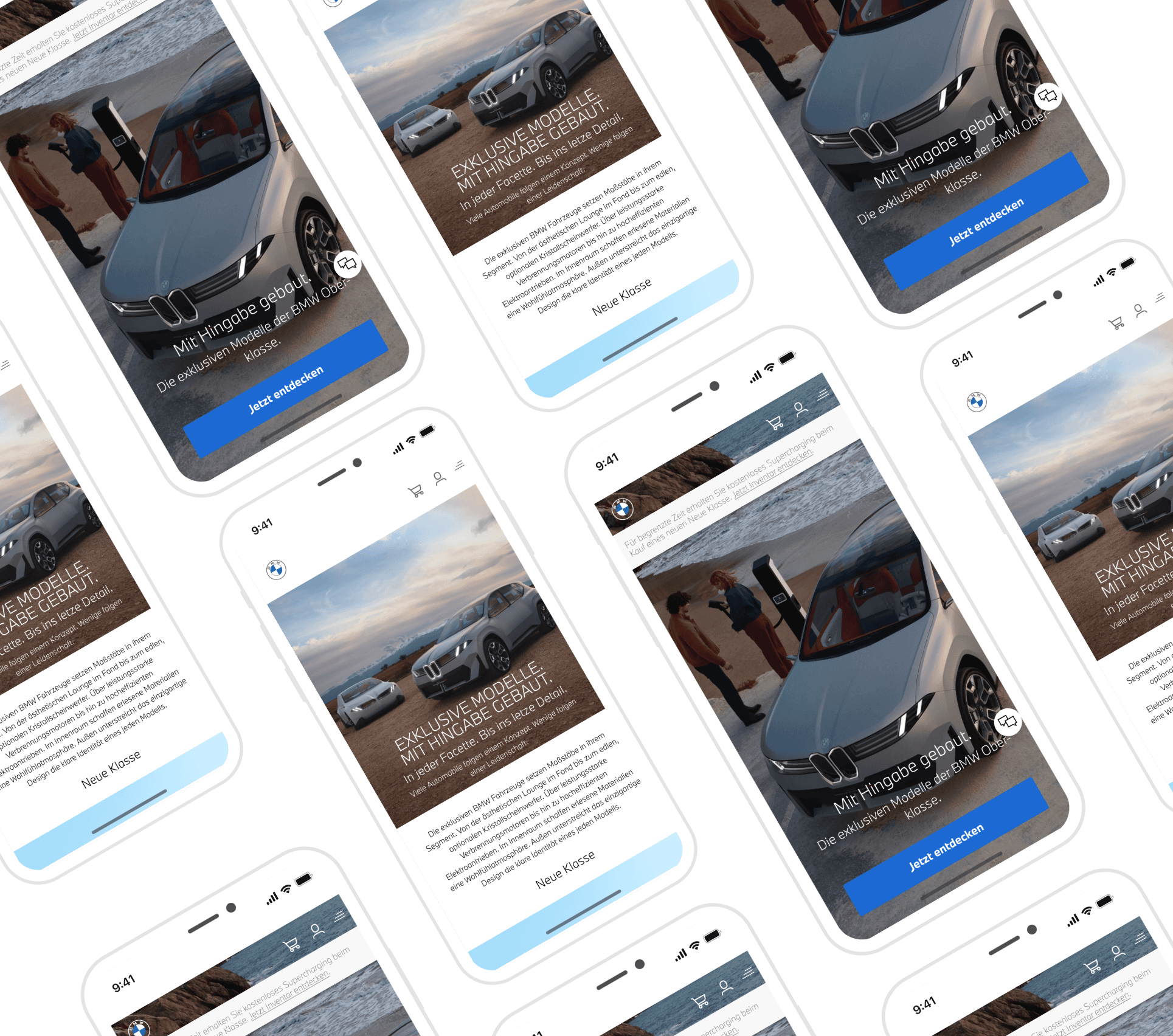
BMW Configurator Redesign Hero
6mo→2wk
Delivery wait time reduced by surfacing ready-to-deliver stock earlier in the journey
3 steps
Fewer friction points before reaching a dealership action — login deferred to end of flow
0 Logins
Required to compare up to 3 vehicles — previously gated behind BMW ID authentication
Context

Why the BMW Configurator matters

Today, over 70% of car buyers research and configure their vehicle online before setting foot in a dealership. The BMW configurator isn't just a product page — it's the primary sales instrument for one of the world's most premium automotive brands.

A poor experience here doesn't just create frustration. It creates abandoned journeys, missed sales, and eroded brand trust. This concept redesign was driven by a heuristic audit of the live configurator, identifying where the experience contradicts BMW's core brand promise: Sheer Driving Pleasure.

💡

The core tension: BMW sells aspiration — but the configurator was creating anxiety. Users were building dream cars only to discover 6-month waits, hitting login walls mid-journey, and unable to compare options without creating an account first.

Problem Definition

Three structural failures quietly killing conversions

Through a heuristic evaluation and analysis of the live configurator experience, three critical UX failures emerged — each one a direct contradiction of the premium experience BMW promises.

Problem 01
The Invisible Inventory Problem
Users spend 20–40 minutes configuring a dream vehicle, only to discover at checkout that it will take 4–6 months to arrive. Ready-to-deliver stock existed — but was never surfaced during configuration. Result: abandoned journeys and missed conversions.
Problem 02
Premature Authentication
The BMW ID login wall appeared immediately after "Additional Packages" — right when users were still in exploration mode and not ready to commit personal details. This friction caused significant drop-off at the most critical moment of intent.
Problem 03
Gated Comparison
Comparing vehicles — a fundamental decision-making tool — required a logged-in account. This locked out casual browsers and price-sensitive decision makers at the exact moment they needed help choosing.
Design Process

From audit to architecture

A structured process ensured every design decision was grounded in user behaviour and business logic — not aesthetic preference.

01 — Discover
Heuristic Evaluation
Systematic audit of the live BMW configurator against Nielsen's 10 usability heuristics. Identified 14 violations across the journey — 3 classified as critical severity.
02 — Define
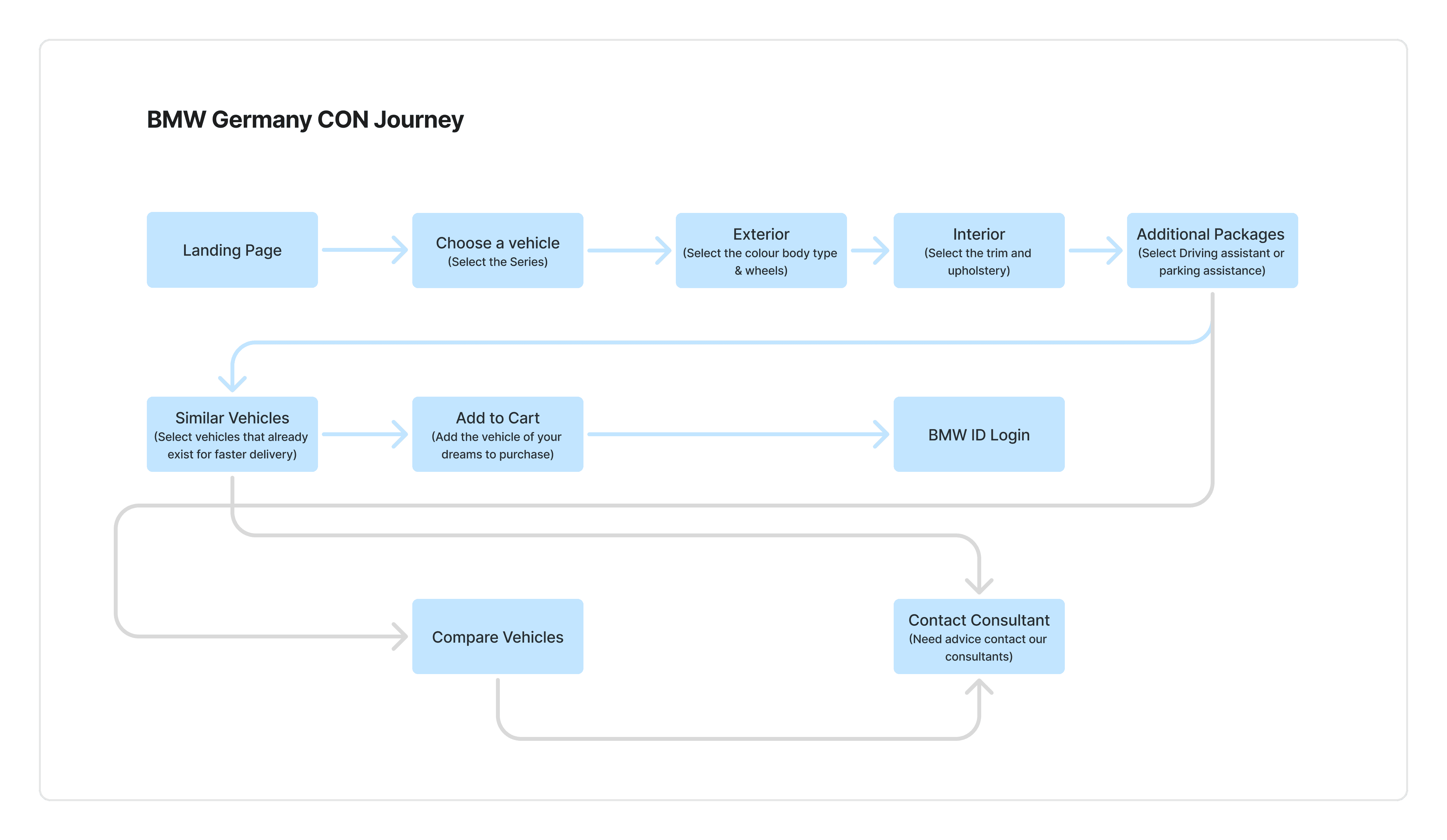
Journey Mapping
Mapped the full configurator flow end-to-end, identifying where users drop off, where cognitive load peaks, and where business opportunities are being missed.
03 — Ideate
Competitive Analysis
Benchmarked against Tesla, Porsche, and Mercedes configurators — identifying patterns that reduce decision fatigue and surface inventory intelligently.
04 — Design
Concept Design
Redesigned the core flows: inventory surfacing, login deferral, and guest comparison. Each solution directly resolves one of the three identified problems.
Design Solutions

Three solutions. One unified journey.

Each solution was designed to resolve a specific problem while contributing to a more coherent, premium end-to-end experience.

Solution 01

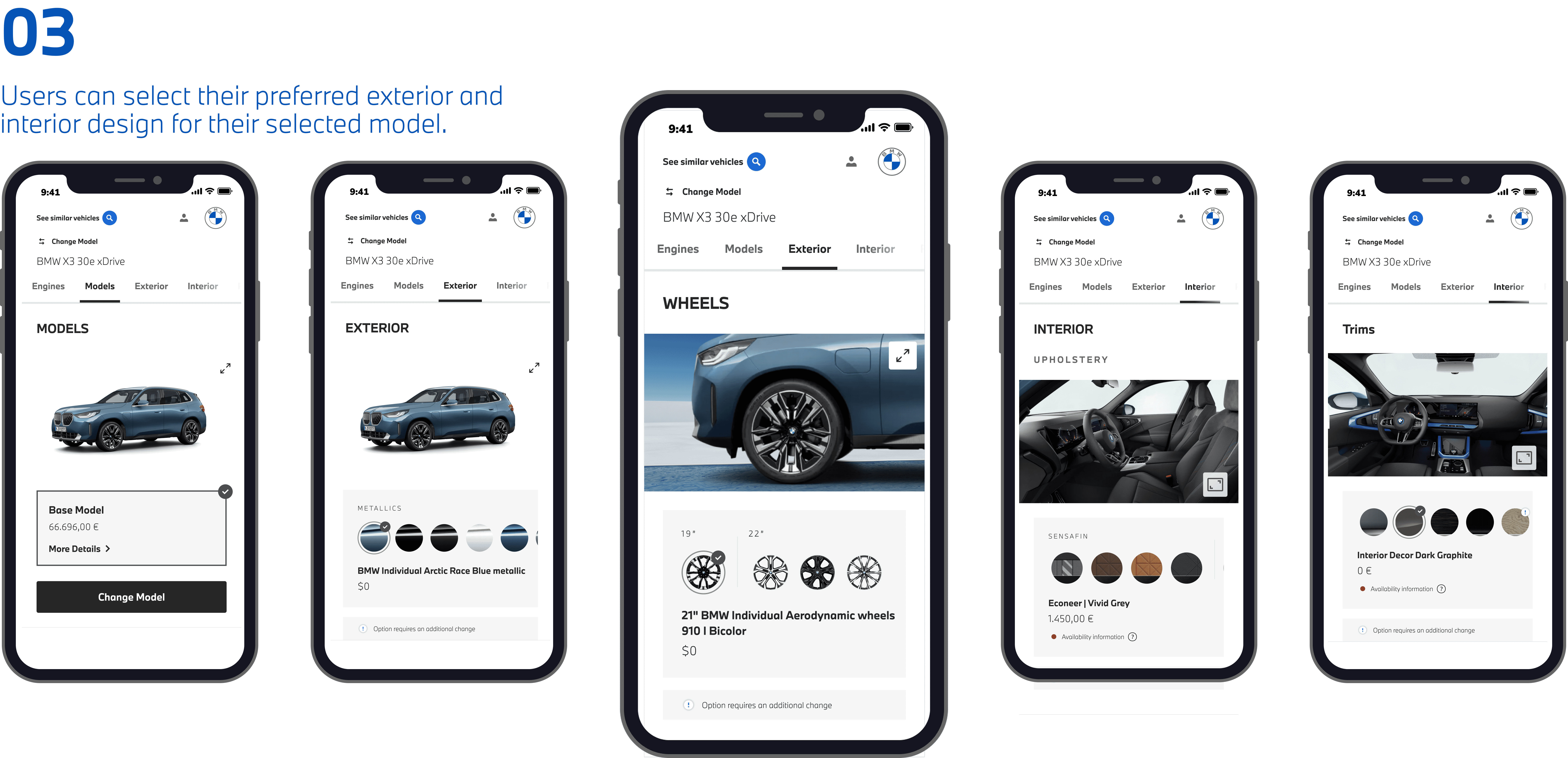
Similar Vehicles Feature

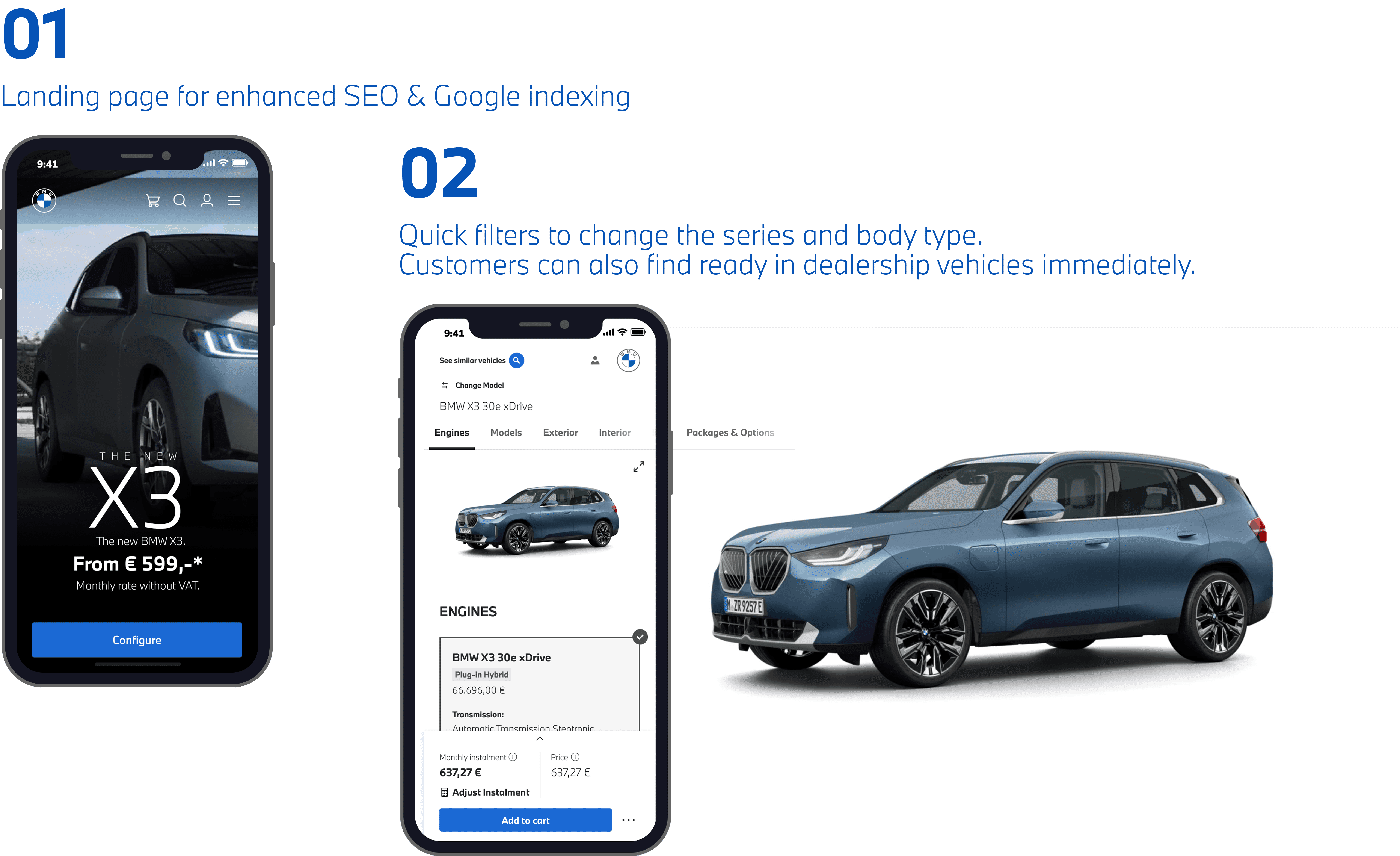
A contextual panel that surfaces ready-to-deliver vehicles matching 90%+ of a user's configuration — introduced at the point of highest intent, before the delivery timeline creates disappointment. Reduces perceived wait from months to weeks.

Delivery: 6 months → 1–2 weeks
Solution 02

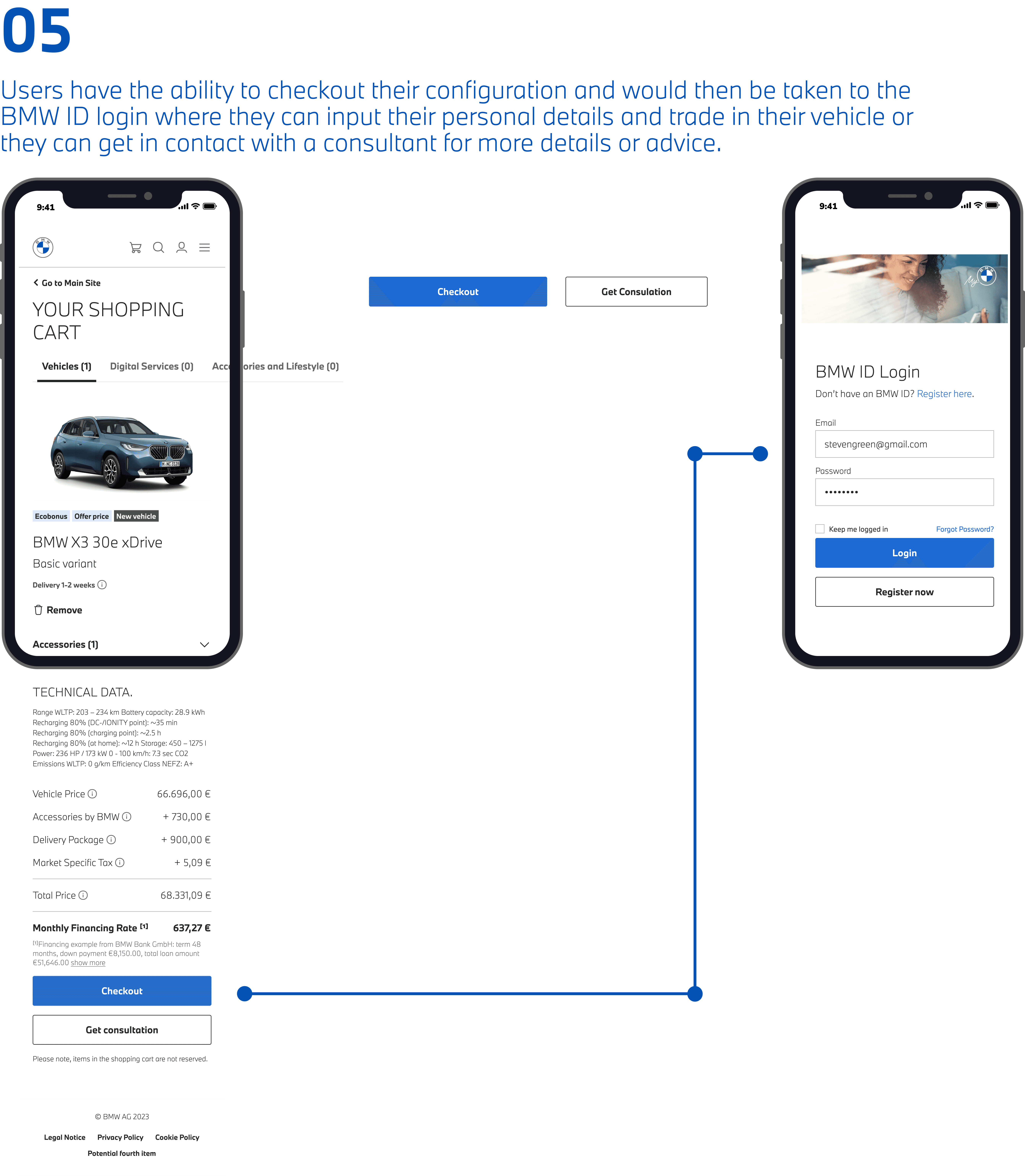
Deferred Login Architecture

BMW ID login moved from mid-journey to the final step — after configuration is complete. Users focus on building their ideal vehicle first. Login becomes a natural save/share action, not a gatekeeping interruption.

Login friction: eliminated mid-journey
Solution 03

Public Vehicle Comparison

Compare up to three vehicles side-by-side with zero authentication required. Designed for the decision-making phase — giving users the confidence to choose before committing to an account. Comparison data persists via session storage, maintaining continuity even for guest users.

Login required: removed entirely for comparison
Design Output

The redesigned experience

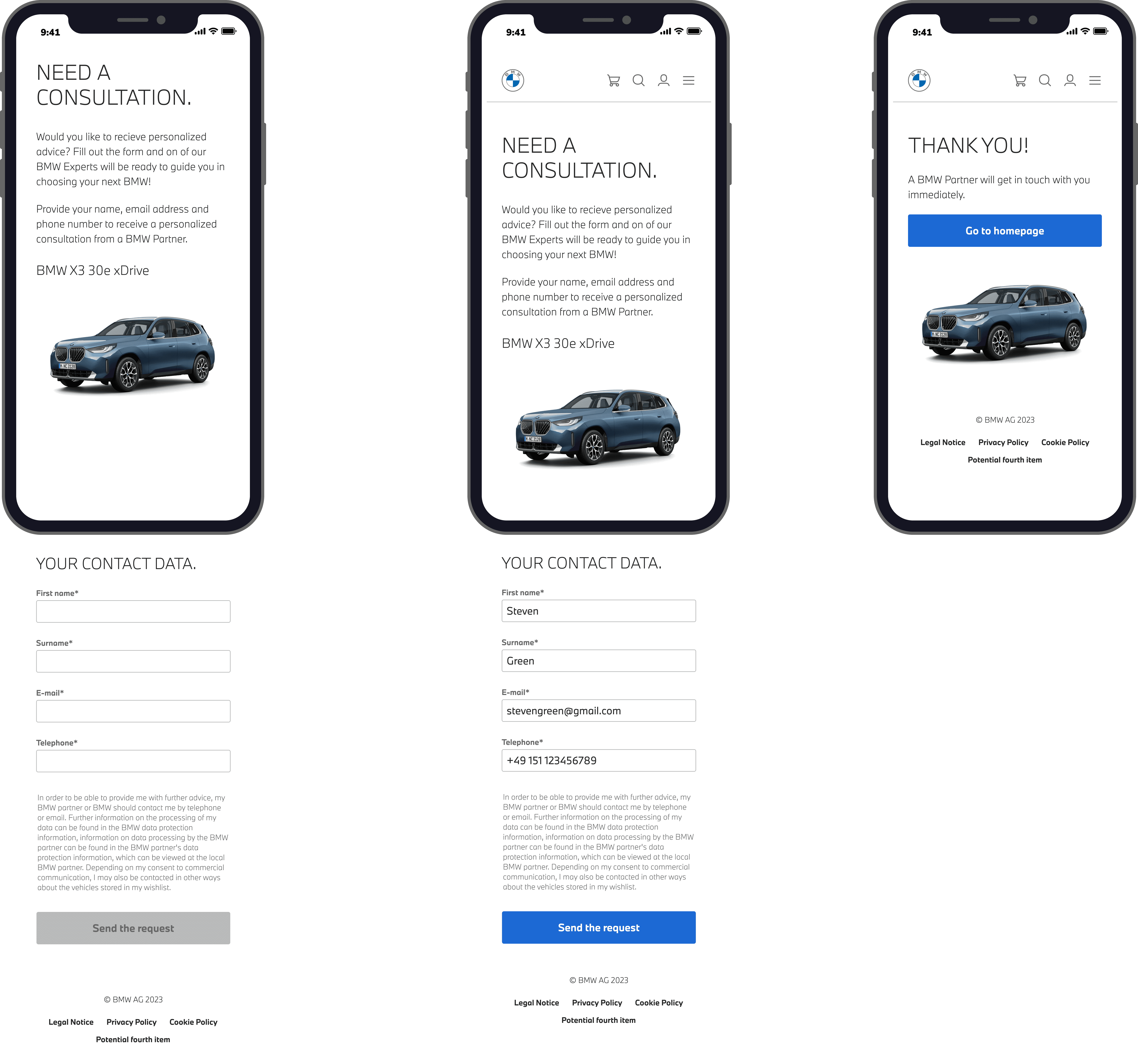
BMW Redesign Screens
BMW Flow Detail 1 BMW Flow Detail 2
BMW Detail 3 BMW Detail 4
Key Design Decisions

The reasoning behind the design

Senior UX design isn't about making things look good — it's about making deliberate, defensible decisions. Here are three moments where I made a conscious choice and why.

Decision
Surface inventory before summary
Why not after summary?
After the summary screen, the user has already felt the disappointment of a 6-month wait. Surfacing alternatives at that point feels like a consolation prize, not a genuine option.
Impact
Showing similar stock during configuration keeps the user in a positive, aspirational mindset — making them more likely to convert to an available vehicle.
Decision
Login deferred, not removed
Why keep login at all?
BMW needs account data for personalisation, saved configurations, and dealership handoff. Removing it entirely would break core business functionality.
Impact
Moving it to the final step respects user autonomy — login becomes a natural conclusion to a completed journey, not a forced entry point to an exploration.
Decision
Guest comparison limited to 3 vehicles
Why a limit?
Unlimited comparison creates paradox of choice — more options increase decision anxiety, not confidence. Three is the cognitive sweet spot backed by research in decision psychology.
Impact
The constraint actually improves the experience. It forces users to prioritise, and gives BMW a natural upsell: log in to save and expand comparison sets.
Reflection

What I'd do differently

Honest self-critique is part of senior UX thinking. If this were a live project with full access, here's what I'd add.

🔬
Validate with real users
This concept is based on a heuristic audit, not user research. In a live engagement, I'd run moderated usability tests on the existing configurator before designing, and A/B test the deferred login against the current flow to measure actual drop-off changes.
📊
Add analytics instrumentation
The designs show the UI — but a production version would need clear event tracking designed in from day one. Funnel visualisation, heatmaps, and session recordings would be specified at the wireframe stage to ensure the data to measure success actually exists.
🤝
Involve dealer network stakeholders
BMW's configurator serves users, BMW corporate, and the dealer network simultaneously. A full project would require workshops with dealership staff to understand how the digital handoff works in practice — and design for that context too.
📱
Mobile-first iteration
These designs are desktop-first. With over 60% of BMW configurator traffic coming from mobile, a proper project would begin with the mobile constraint — and only expand to desktop from there.
Next Case Study
Rainbow Wool — Award-Winning Inclusive E-Commerce