Enterprise UX
Senior UX/UI Designer
Designed it. Taught myself to build it. Shipped 75% of the designs.
Automotive
Problem Framing
Front-end development
APAC Market
Design
B2B · Enterprise
BMW · 2023/4

Context
BMW dealership sales agents in Japan and Korea were managing test drive bookings, emails manually and made notes. The developers came to me first. We built the whole thing together from day one.
The Problem
No central view of bookings, no driver assignment system, and no conflict detection. The same vehicle could be booked by two agents at once and two customers would show up for one car.
The End Result
A real-time test drive dashboard with calendar view, driver assignment and instant conflict detection. I taught myself frontend development to help ship it when the team was short on developers.
✦
BMW Group
✦
BMW Group
✦
BMW Group
✦
BMW Group
✦
BMW Group
✦
BMW Group
✦
BMW Group
✦
BMW Group
✦
BMW Group
✦
BMW Group
✦
BMW Group
✦
BMW Group
✦
✦
BMW Group
✦
BMW Group
✦
BMW Group
✦
BMW Group
✦
BMW Group
How this one started
The developers came to me.
Not the other way around.
On most projects, designers bring problems to developers. On this one, the developers came to me because I was recommended by my manager.
They knew something wasn't working for the sales agents in the APAC region. Bookings were getting confused, drivers weren't being assigned properly and double bookings kept slipping through. They wanted to fix it and they wanted design involved from the start.
That made all the difference. When developers and designers work together from day one and not design then handing off to dev, but actually building something together; the product is better and the process is faster. This was one of those projects. Fast, focused, no drama. We shipped 100% of what we designed.
Fun Fact
Design SYSTEM
This dashboard is different from Nova Data Suite, which was built for regional managers who need a high level view across everything. This tool was built specifically for sales agents on the dealership floor. These are the people who need to move fast and focus on one thing: getting test drives booked, assigned and confirmed without anything falling through the cracks. Same company, same ecosystem, completely different users with completely different needs.
The Problem
Every missed test drive is
a missed sale.
A test drive is one of the most important moments in a car sale. It's where a customer goes from interested to committed. But the process of booking and managing test drives at BMW dealerships in Japan and Korea was completely manual and it was causing real problems for the agents doing it every day.
The worst part? Double bookings. Two agents booking the same vehicle for two different customers at the same time with no system to catch it. Two customers showing up for one car.
For a premium brand like BMW, that's not just an inconvenience. That's a customer who might walk out and never come back.

01
No visibility into upcoming test drives
Agents had no central view of what was booked, when or what status each drive was in. Everything lived in emails, notes and people's heads. There was no way to see the full picture at a glance.
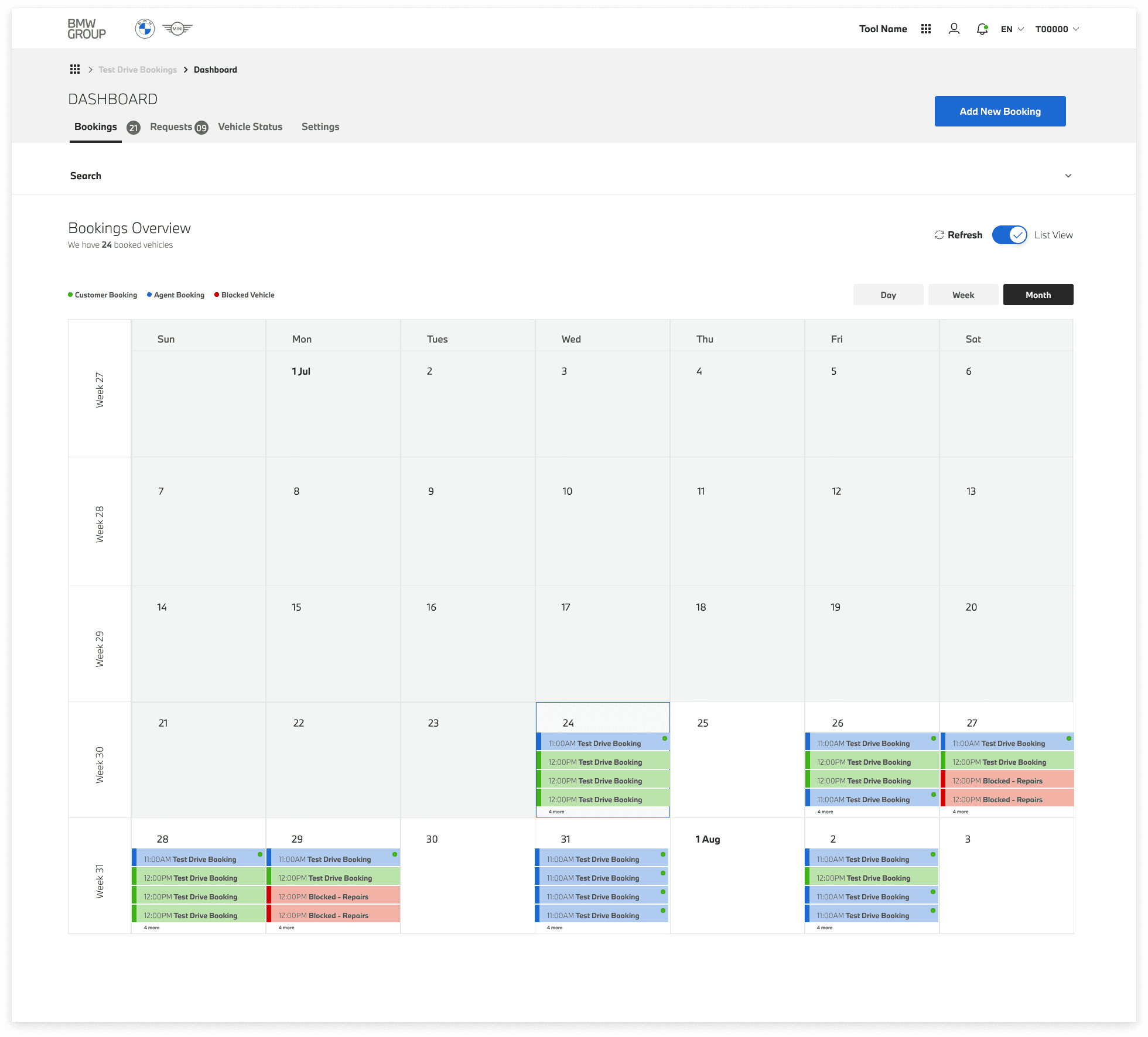
Fix: a calendar view showing all upcoming drives clearly.

02
No way to assign drivers to bookings
When a test drive was booked, there was no system for assigning which agent or driver would take the customer out. This meant last minute scrambles, confusion, and sometimes nobody showing up at all.
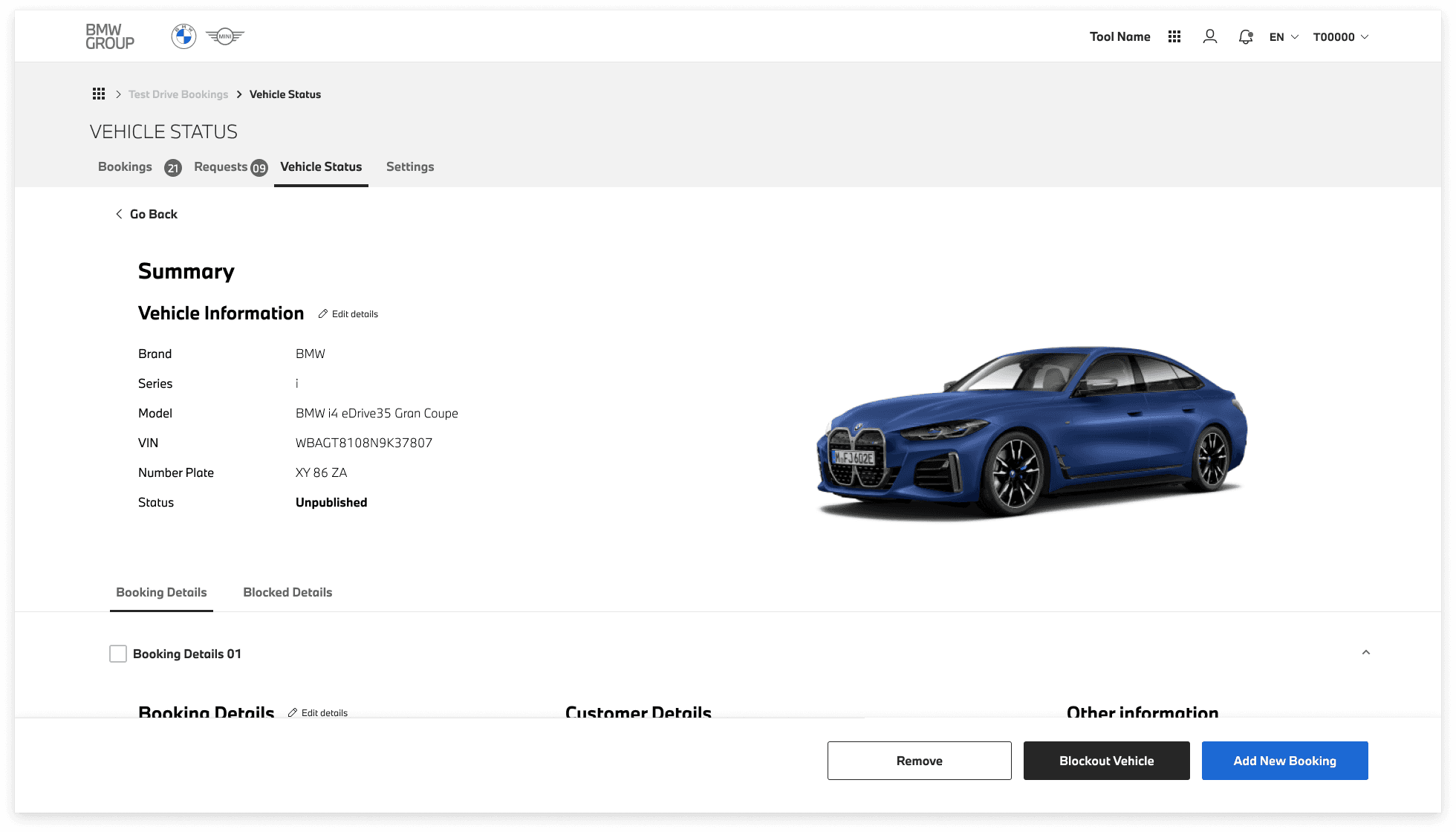
Fix: driver and vehicle assignment built into every single booking.

03
Double bookings with no warning
Without a connected system, the same vehicle could be booked by two different agents for two different customers. No alert. No conflict check. Just two customers turning up for one car.
Fix: real-time availability with instant conflict detection.

04
Customers waiting too long for confirmations
Because everything was manual, confirming a booking took time. Customers would request a test drive and hear nothing back for hours. For a premium BMW experience, that wasn't good enough.
Fix: a clear status tracker: confirmed, pending, completed.
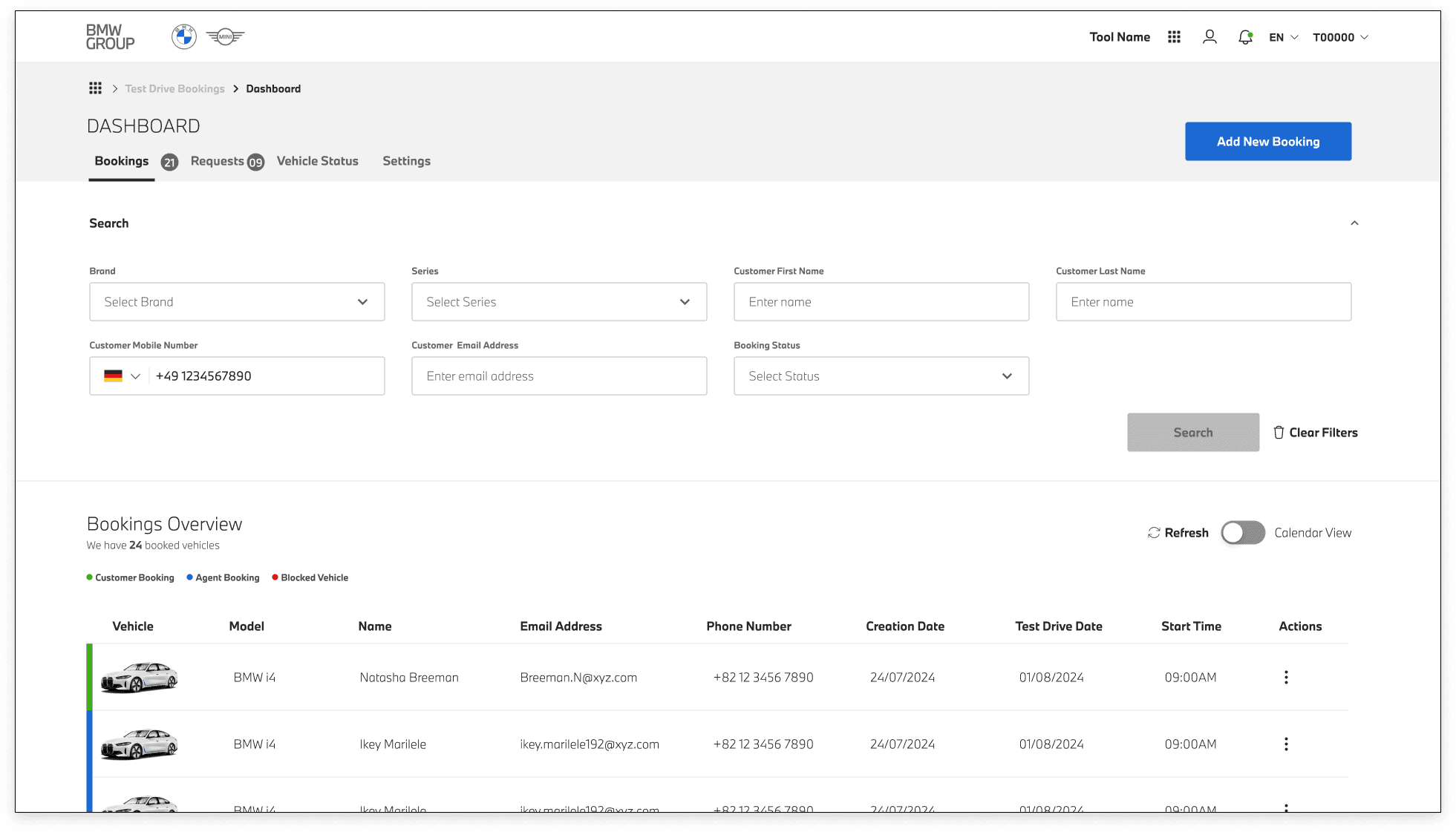
Real screens from the live product. The bookings overview shows test drives managed across BMW dealerships with colour coded status, vehicle images, and full search and filter capability.
Designing for the APAC Market
Japan and Korea aren't
the same market.
Designing for the APAC region meant understanding that each market has its own way of doing things. It's not enough to translate the interface into a different language. The way customers expect to book a test drive, the way agents manage their schedule and the level of formality in the interaction all differ between Japan and Korea. We had to design for both without building two completely separate tools.
🇯🇵 Japan
Precision and process matter above everything
Japanese customers expect a high level of precision in the booking process. Confirmation details, exact timing, and clear communication at every step are non-negotiable. The dashboard needed to make it easy for agents to get every detail right because in Japan, getting it wrong isn't just an inconvenience, it damages trust.
🇰🇷 Korea
Speed and responsiveness drive the experience
Korean customers move fast and expect businesses to move just as fast. Quick confirmations, real-time updates and efficient booking management were the priority. Agents needed a tool that kept up with the pace which made the conflict detection and instant status updates even more critical for this market.
Designing for one market is straightforward. Designing for two markets that
work differently without building two separate products is where the real
thinking happens.
What we built together
ONE dashboard.
Everything an agent needs.
Designing for the APAC region meant understanding that each market has its own way of doing things. It's not enough to translate the interface into a different language. The way customers expect to book a test drive, the way agents manage their schedule and the level of formality in the interaction all differ between Japan and Korea. We had to design for both without building two completely separate tools.
🇯🇵 Japan
Precision and process matter above everything
Japanese customers expect a high level of precision in the booking process. Confirmation details, exact timing, and clear communication at every step are non-negotiable. The dashboard needed to make it easy for agents to get every detail right because in Japan, getting it wrong isn't just an inconvenience, it damages trust.
🇰🇷 Korea
Speed and responsiveness drive the experience
Korean customers move fast and expect businesses to move just as fast. Quick confirmations, real-time updates and efficient booking management were the priority. Agents needed a tool that kept up with the pace which made the conflict detection and instant status updates even more critical for this market.
Designing for one market is straightforward. Designing for two markets that
work differently without building two separate products is where the real
thinking happens.
01 . ONE Dashboard
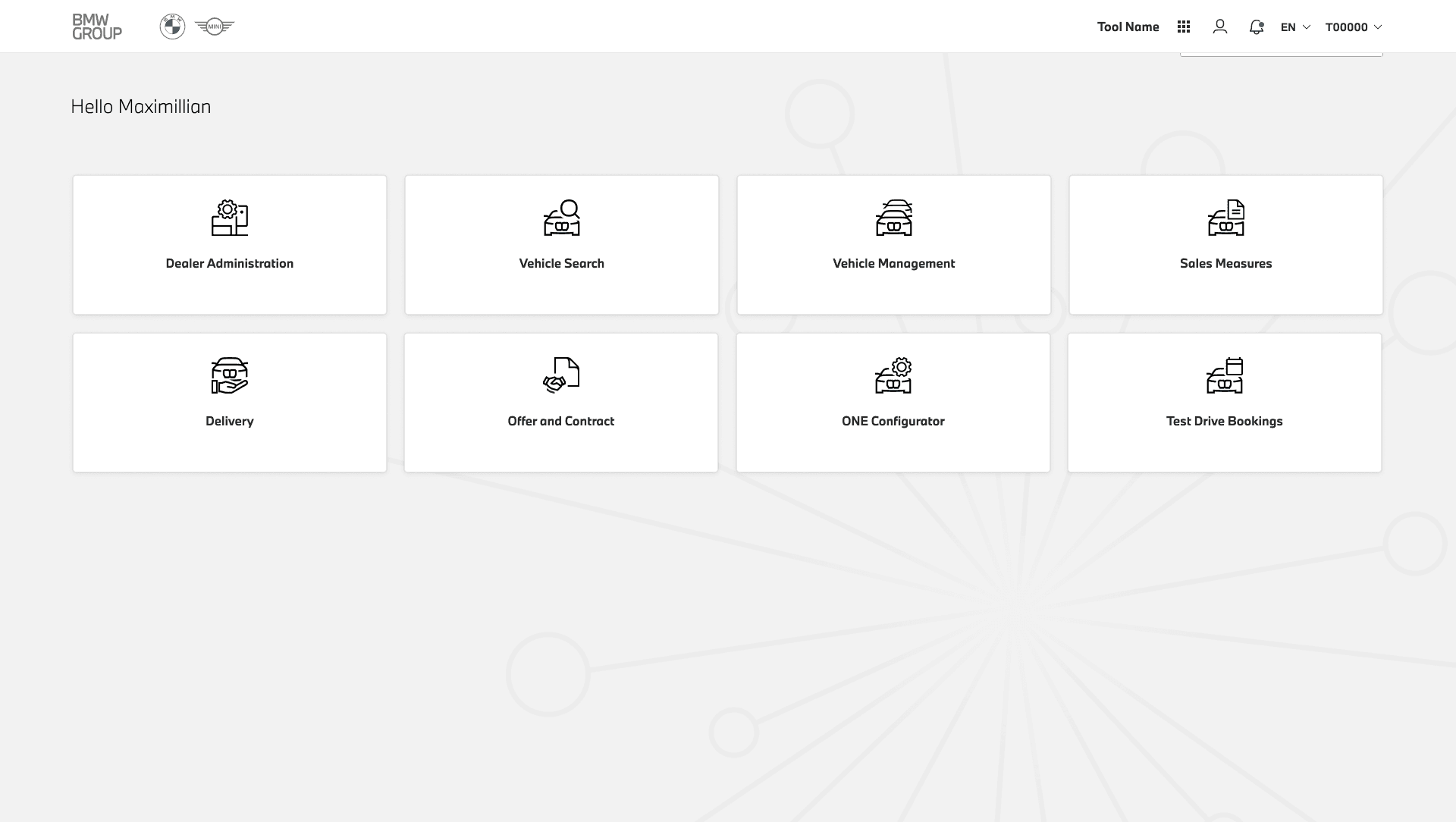
02 . A calendar view of all upcoming test drives
03 . Driver and vehicle assignment on every booking
How we shipped it
Short on developers.
So I learned frontend and helped build it.
We didn't have enough frontend developers to build at the pace the project needed. On a project where the team dynamic was this good, the last thing I wanted was for us to slow down because of a resource gap. So I filled it.
I taught myself the frontend skills I needed: HTML, CSS and enough JavaScript to contribute meaningfully to the build. I worked alongside the dev team building components, fixing issues, and making sure what got built matched what I'd designed. We shipped 100% of it. Every feature. Every screen. Exactly as designed.
Working that closely with developers on the build also made me a better designer. When you understand how something gets built, you stop designing things that are beautiful in Figma, but painful to build in code.
What changed
Faster bookings. Zero double bookings.
A team that actually enjoyed building it.
After the dashboard launched across the APAC region, the results were immediate. Agents could confirm bookings faster. Double bookings stopped completely because the conflict detection caught them before they happened.
And for the first time, everyone on the team designer and developers could point to something they'd built together from start to finish.
100%
of the design shipped fully, across Japan, and Korea.
0
double bookings possible with real-time conflict detection built in
1,875+
test drive bookings managed through the live platform
What I took away from this
Honest reflection
This is what good collaboration actually feels like.
Not every project is a battle. This one wasn't. The developers came to me, we figured out the problem together, we built it together and we shipped the whole thing. That's not luck, that's what happens when everyone on the team cares about the same thing: getting it right for the people who will use it every day.
Designing for Japan and Korea in the same product taught me to look past surface-level localisation. It's not just about translating the words, it's about understanding how people in different markets think about time, trust and service and building that understanding into every decision you make.
And teaching myself frontend on this project wasn't a sacrifice. It was one of the best things I did for my career. Understanding how things get built makes you a better designer.