My Role
Senior UI/UX Designer
SCOPE
End-to-end · 0 to 1
My Role
Senior UI/UX Designer
SCOPE
End-to-end · 0 to 1
Launched
2025
Recognition
Innovation award
My Role
Senior Product Designer
SCOPE
End-to-end · 0 to 1
Launched
2025
Recognition
Innovation award
Putting life into an award winning 0-1 digital product (B2C)
Rainbow wool · 2025
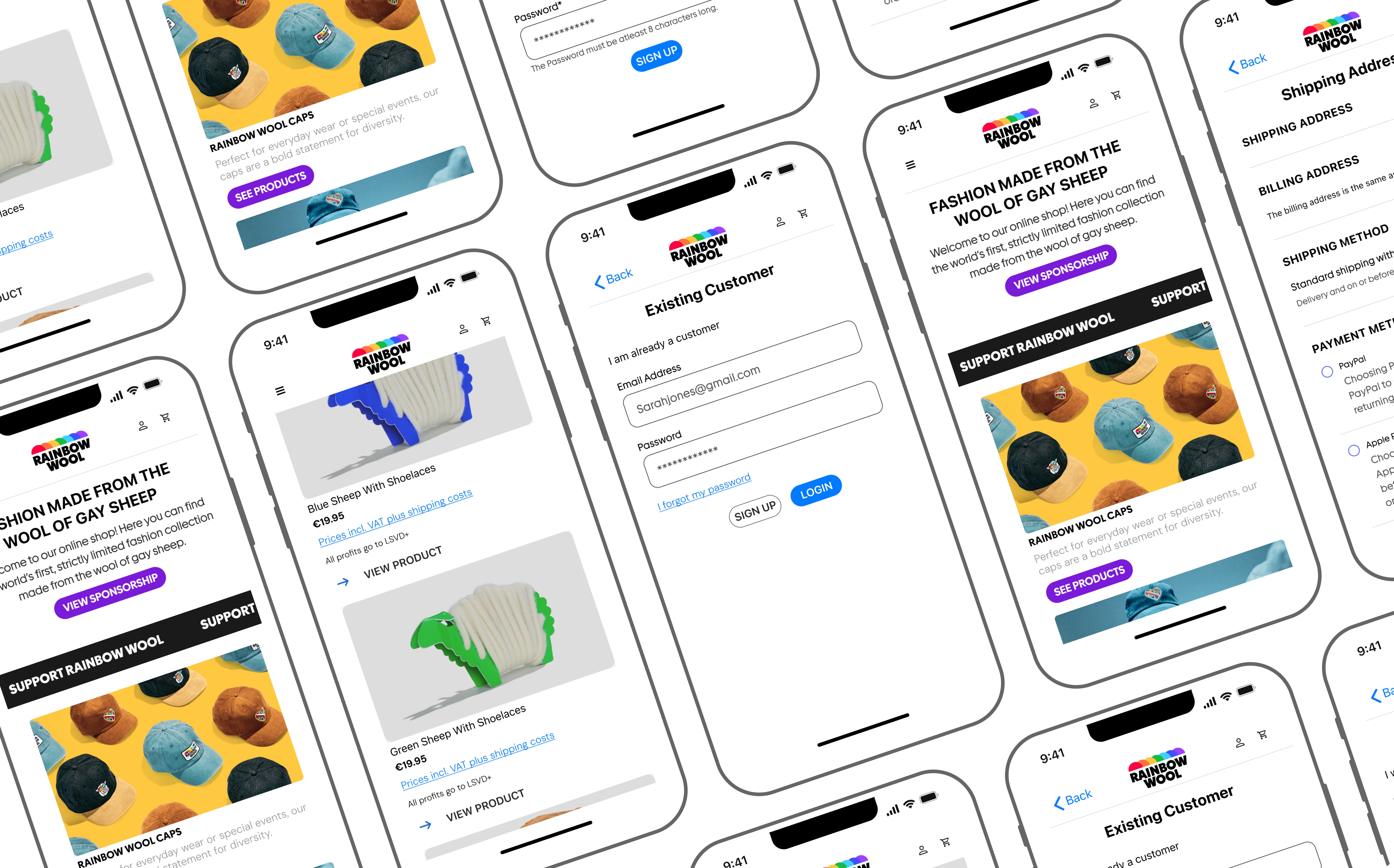
Building an inclusive e-commerce experience from scratch for Rainbow Wool. From market research and brand identity through to a live, award-winning store.
Putting life into an award winning 0-1 digital product (B2C)
Rainbow wool · 2025
Building an inclusive e-commerce experience from scratch for Rainbow Wool. From market research and brand identity through to a live, award-winning store.
My Role
Senior Product Designer
SCOPE
End-to-end · 0 to 1
Launched
2025
Recognition
Innovation award
Putting life into an award winning 0-1 digital product (B2C)
Rainbow wool · 2025
Building an inclusive e-commerce experience from scratch for Rainbow Wool. From market research and brand identity through to a live, award-winning store.
My Role
Senior Product Designer
SCOPE
End-to-end · 0 to 1
Launched
2025
Recognition
Innovation award
3 min read
01
The Problem
A product worth loving.
No way to buy it.
Full product design. Market research to launch. One industry innovation award.
Every year, thousands of male sheep are overlooked and therefore discarded. This is because they don't mate with female sheep. Farmers therefore label them as "imperfect".
Rainbow Wool farmers saw something different: sheep with a story, wool with a purpose and a brand build around second chances.
The resources existed but no one was interested in purchasing it. Rainbow Wool had no online store, no e-commerce experience and no digital presence at all.
My job was to build one from nothing and build it in a way that matched the warmth, inclusivity and care that sat at the heart of the brand.
"The sheep were being discarded for being different. The store needed to feel like the opposite of that. A place where being different was the whole point."
02
Competitor Analysis
What the market was doing and
what it wasn't.
Before designing anything I ran a benchmark analysis across four comparable fashion e-commerce brands: Ucon Acrobatics, Jan N June, Hugo Boss, and Armedangels. I focused specifically on mobile navigation. Being the highest-friction point in any mobile shopping experience and documented four patterns that appeared consistently across all four brands.
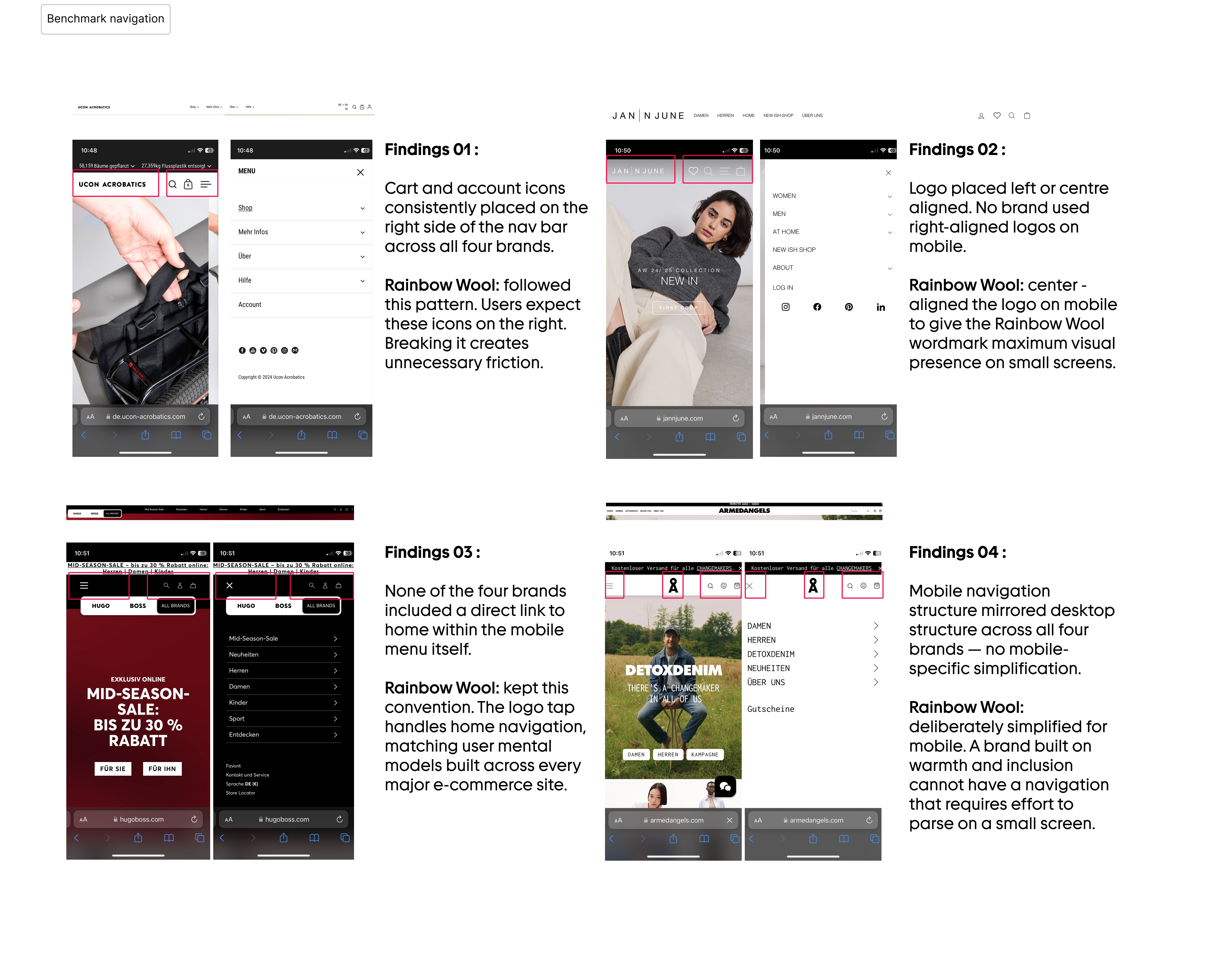
Benchmark: Ucon Acrobatics, Jan N June, Hugo Boss, Armedangels — mobile navigation patterns and findings.
03
Strategic Insights
Three things research
made clear.
By aligning with the Service Plan Cologne Team on business and brand objectives early and synthesising the competitive audit into actionable opportunities, three insights shaped every design decision that followed
01. Story is the product
Customers don't just buy wool. They're buying into a mission. Every screen needed to carry the narrative of being more than just a product grid.
02. Inclusion had to be felt
Most "inclusive" brands declare it in their About page. Real inclusion lives in touch targets, contrast ratios and checkout clarity.
03. Warmth converts
Values-led shoppers are loyal, but only if the experience feels consistent with the brand's promise from homepage to order confirmation.
04
Brand Identity
A Visual language built around
celebration
I explored multiple visual directions and validated each for accessibility and emotional resonance. The chosen direction bold rainbow arc, high-contrast black wordmark and full spectrum palette. The TWK Burns typeface was the only one that matched the energy of the mission. Loud enough to celebrate. Structured enough to trust.
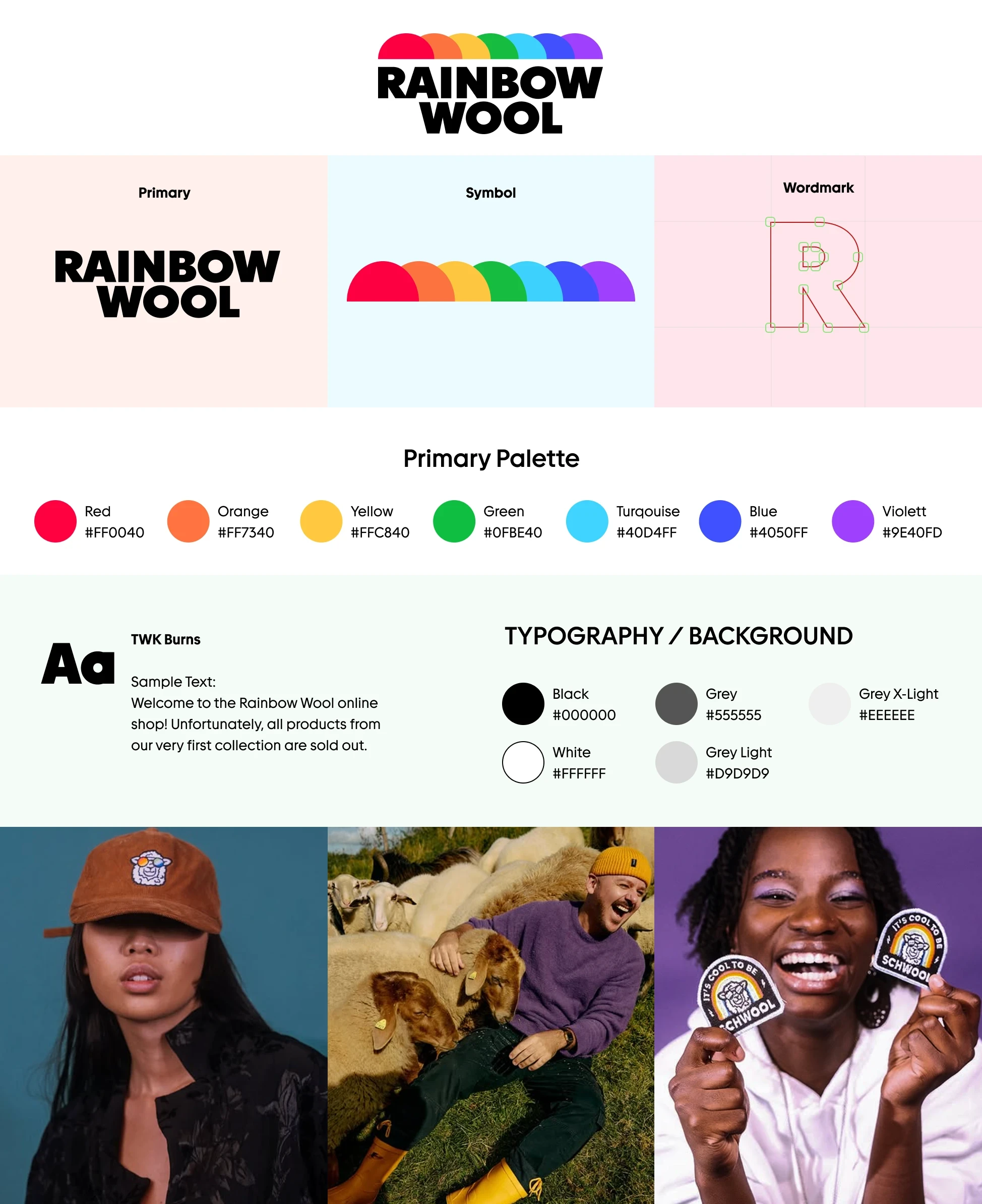
Brand system: primary logo, rainbow arc symbol, 7-colour palette, TWK Burns typeface, and photography direction — all validated for accessibility before any UI design began.
05
Wireframes
Structure before style.
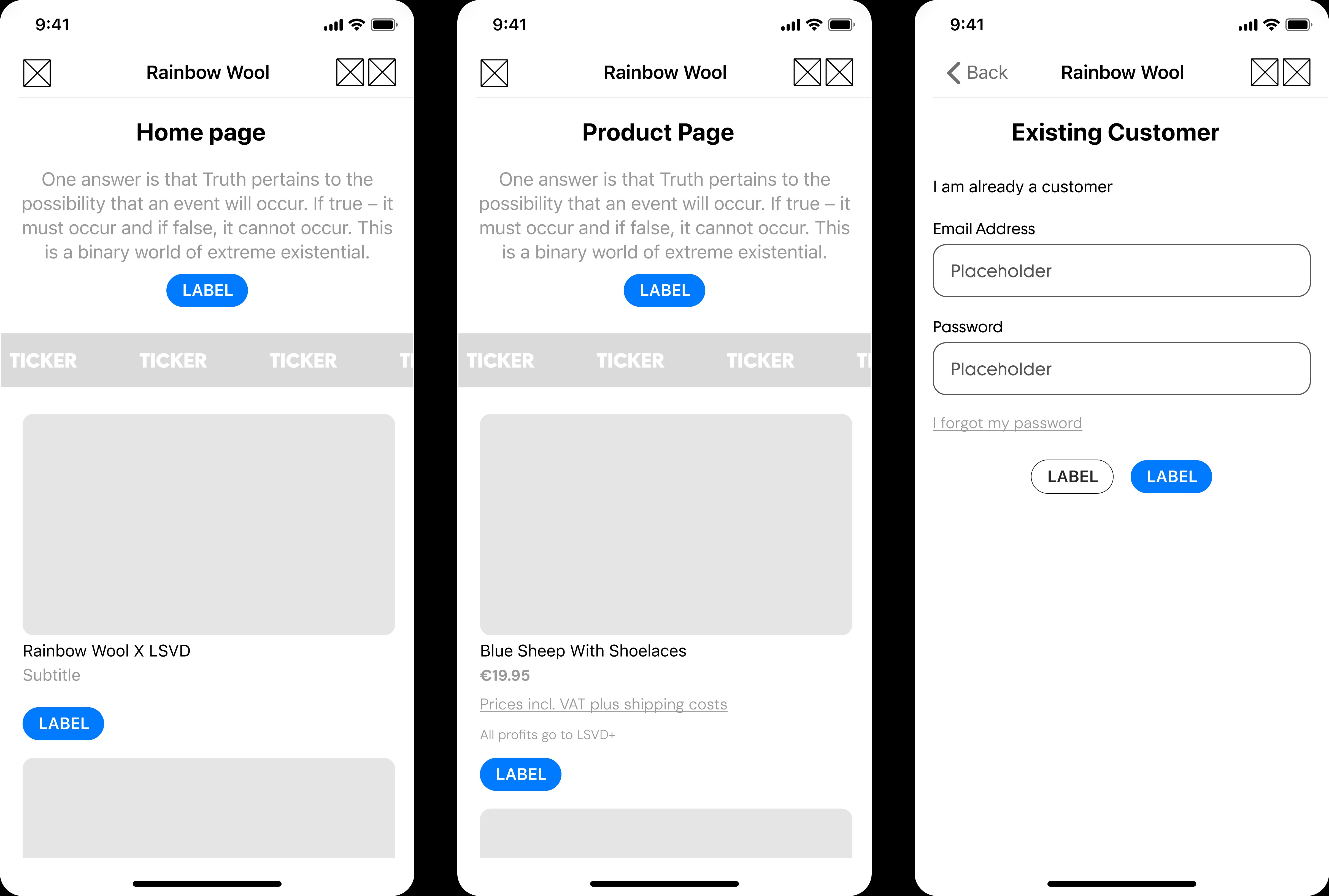
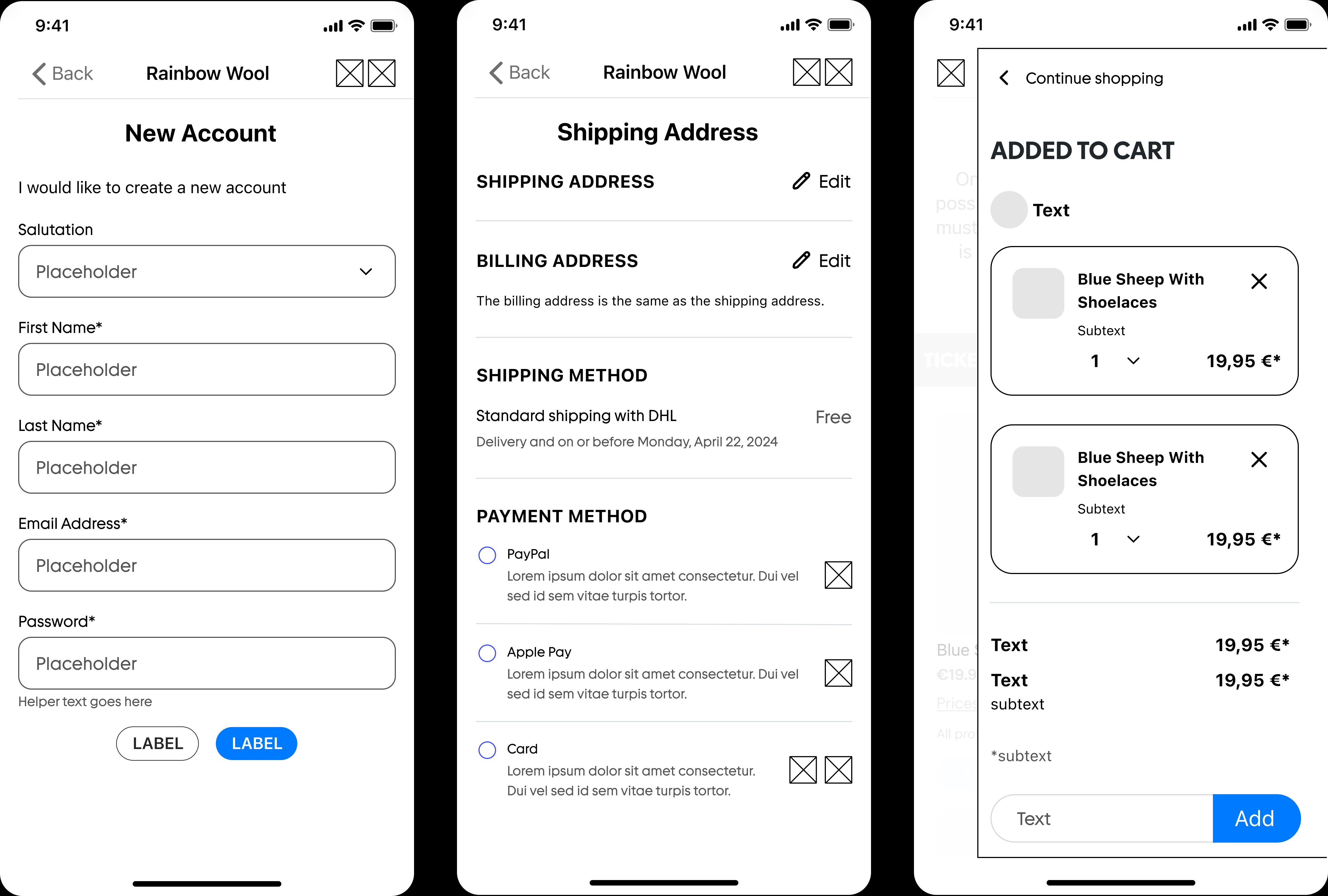
Wireframes came before colour or branding by keeping focus on flow logic and accessibility. Four screens: home, collections, checkout, and order confirmation. The checkout was accessibility tested at wireframe stage.
06
Design System
One system.
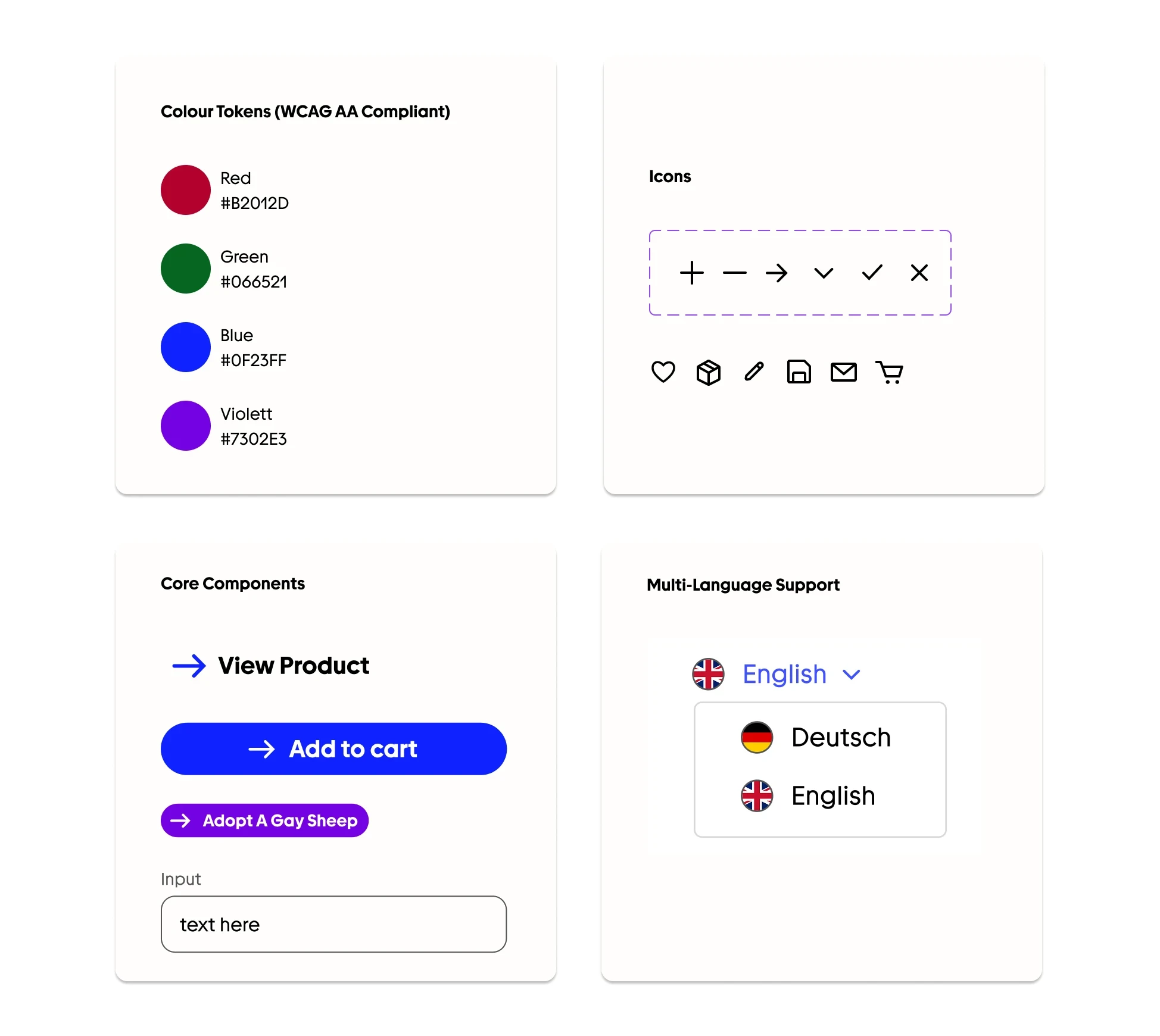
Built from scratch as a single source of truth for design and development. Colour tokens, icons, components and multi-language support as we were launching in the USA too. WCAG AA compliant throughout.
07
Key Decisions
Three decisions that
defined the product.
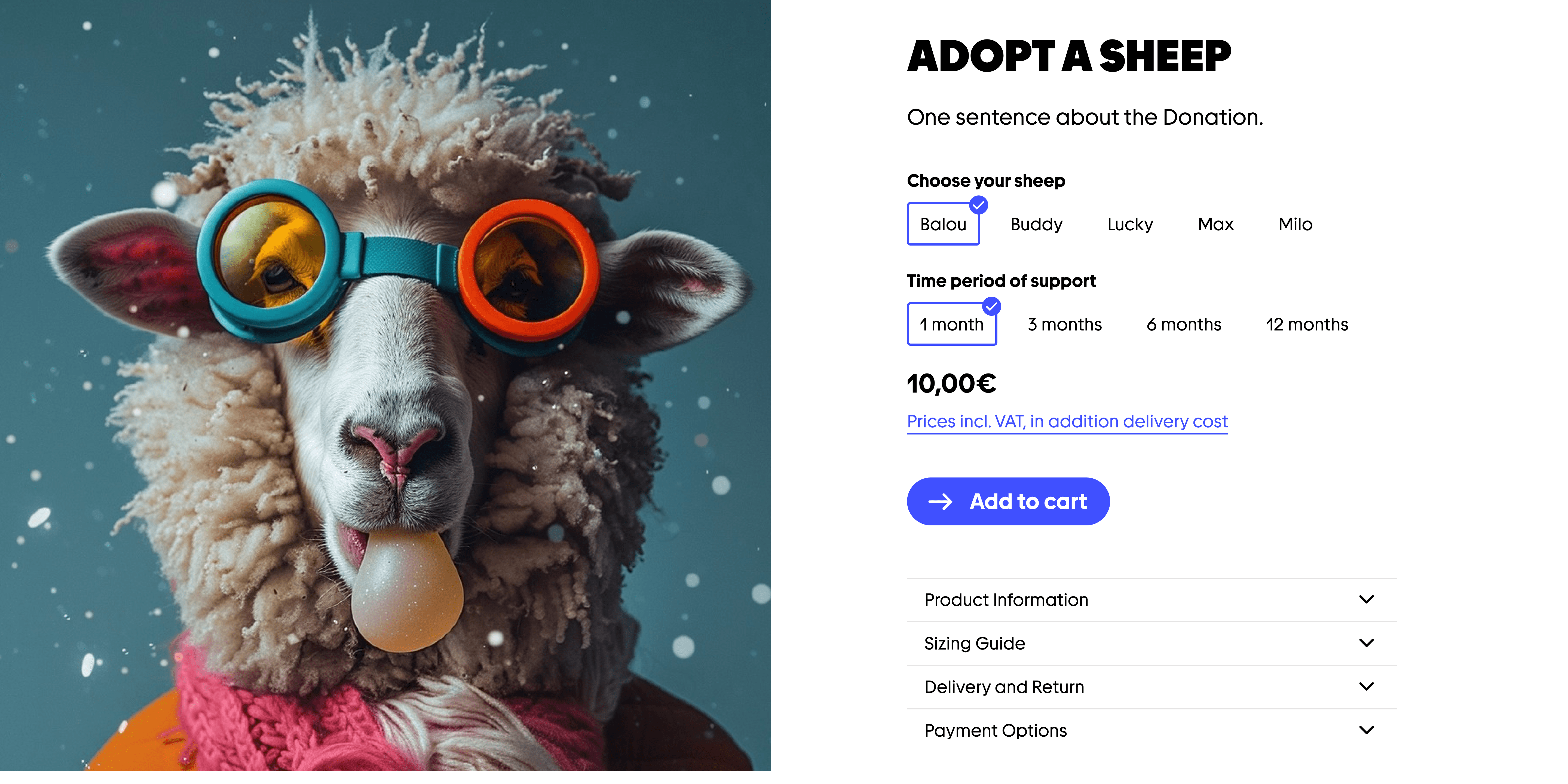
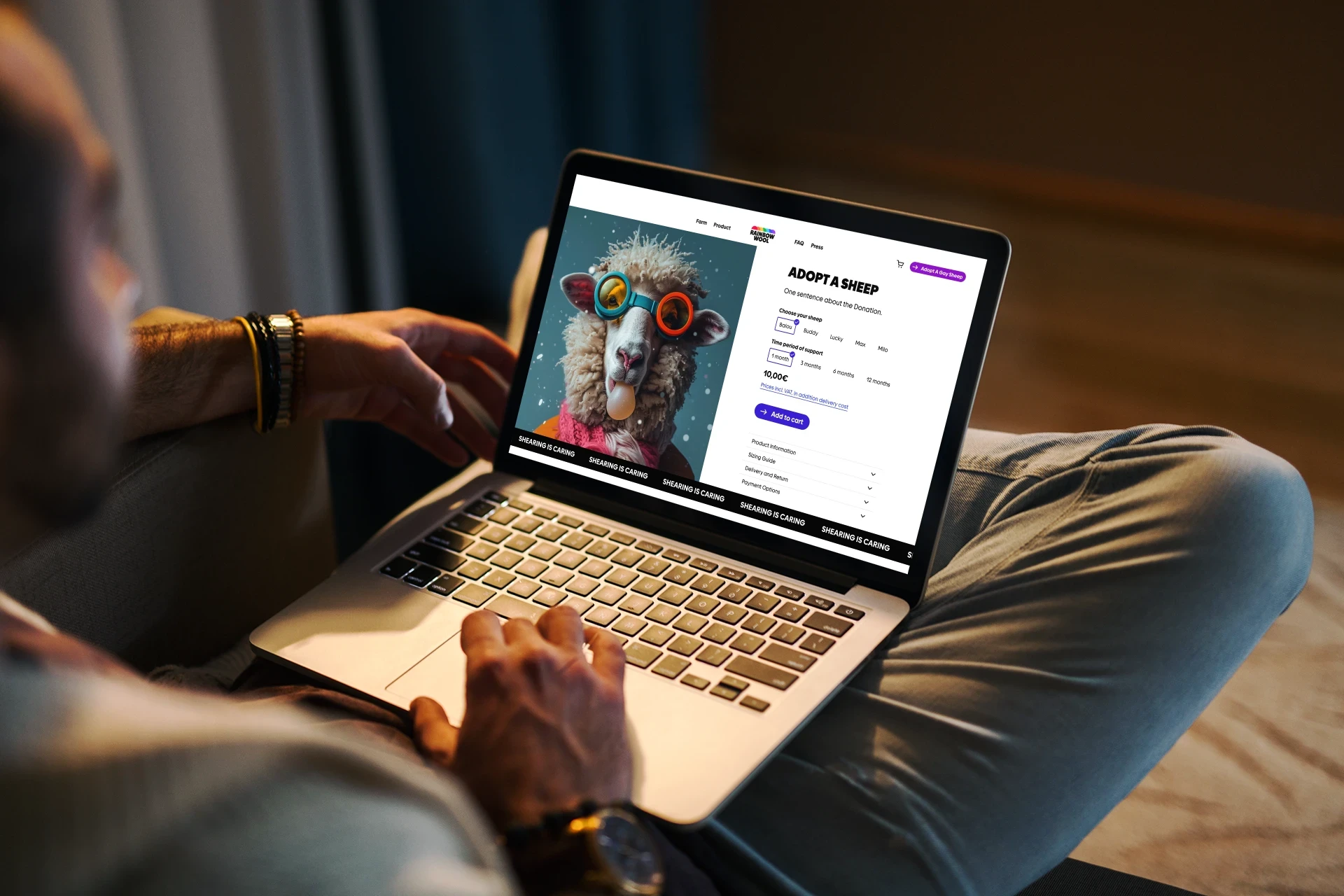
Decision One: Story before selling "Adopt a Sheep" feature
We led with the sheep by placing their names, personalities and story before a single product grid. Customers could choose a specific sheep to support with their purchase, turning a transaction into a relationship.
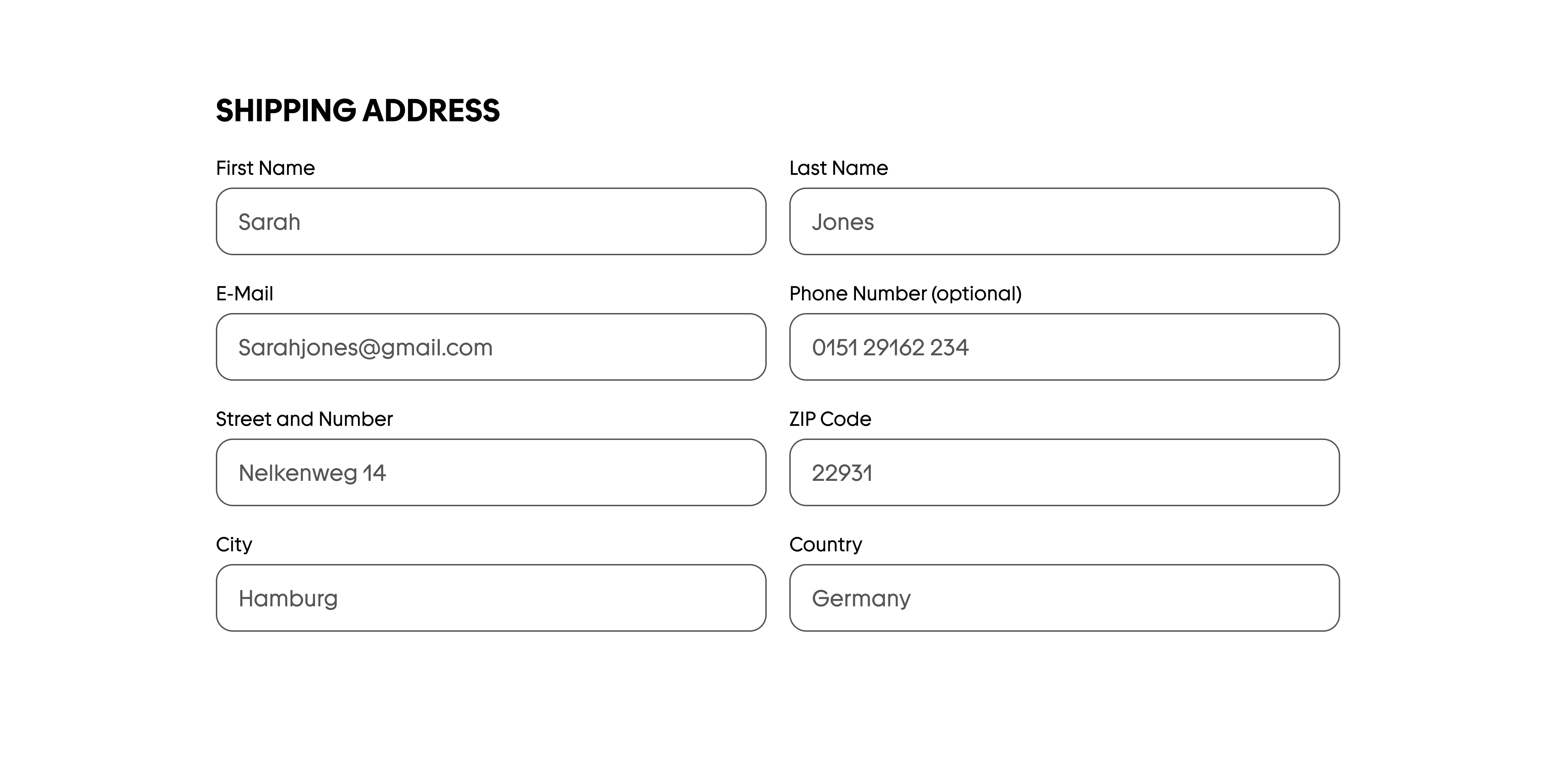
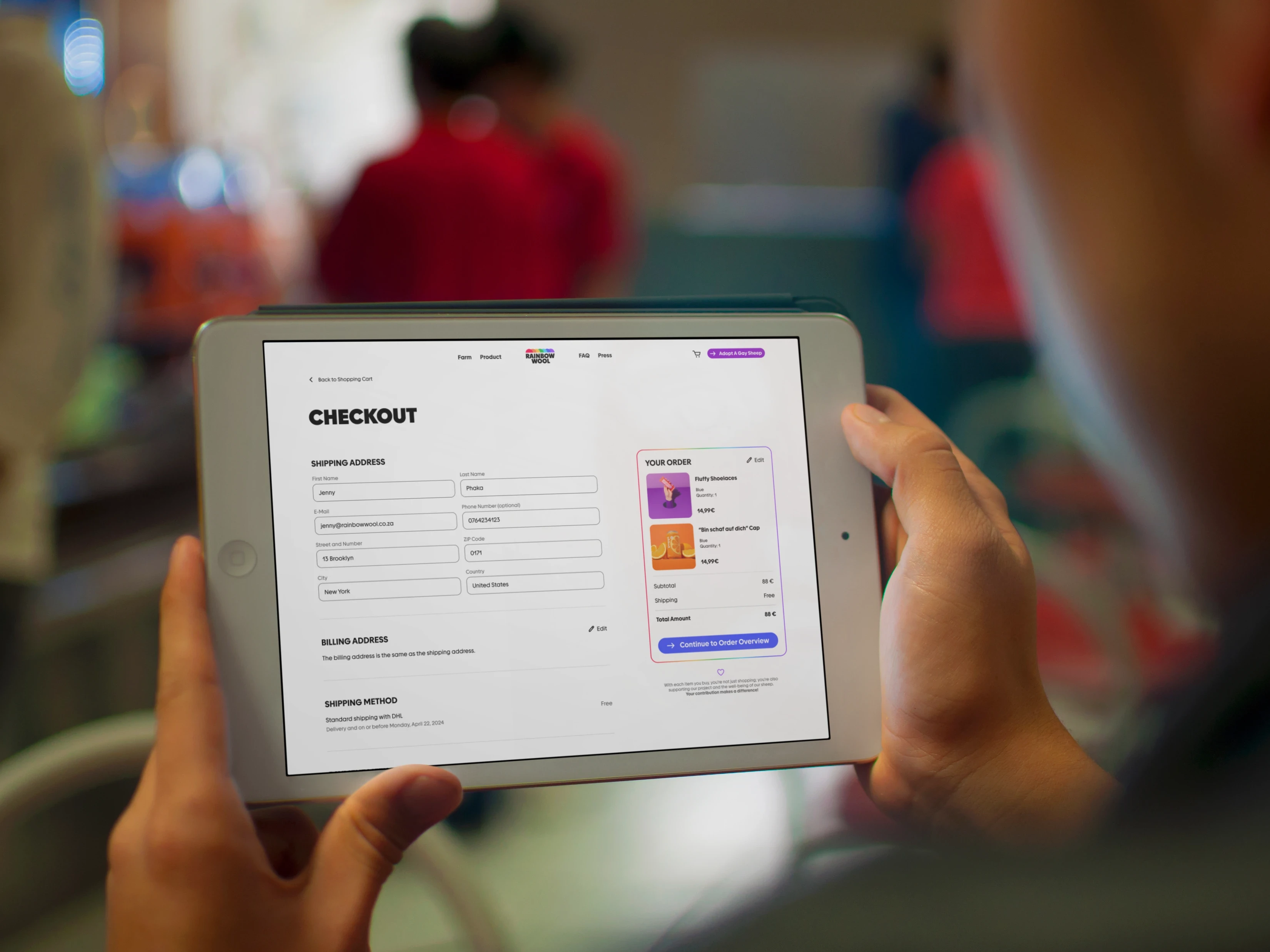
Decision Two: Accessibility built into our checkout from the first wireframe
Labels above every field, logical grouping, persistent order summary, and a brand mission message in the order panel throughout. PayPal, Apple Pay, and card offered to reduce payment friction.
Decision Three: Warmth carried through to confirmation and packaging
The order confirmation was designed as a celebration, not a receipt. The design system extended into packaging mockups so the experience continued through to the unboxing moment.
08
Outcome
Zero to award winning.
0 - 1
Complete product from nothing.
Award
Clio industry innovation recognition
WCAG
AA Compliant system built in.
2 lang
English & German from day one.
09
Reflection
What I took away
Inclusive design isn't a feature, it's a decision you make at the beginning and defend all the way through to the packaging. Every decision here asked the same question: does this feel like it was made for everyone? That question is what won the award. It's also what made the product worth using.
Next Case Study
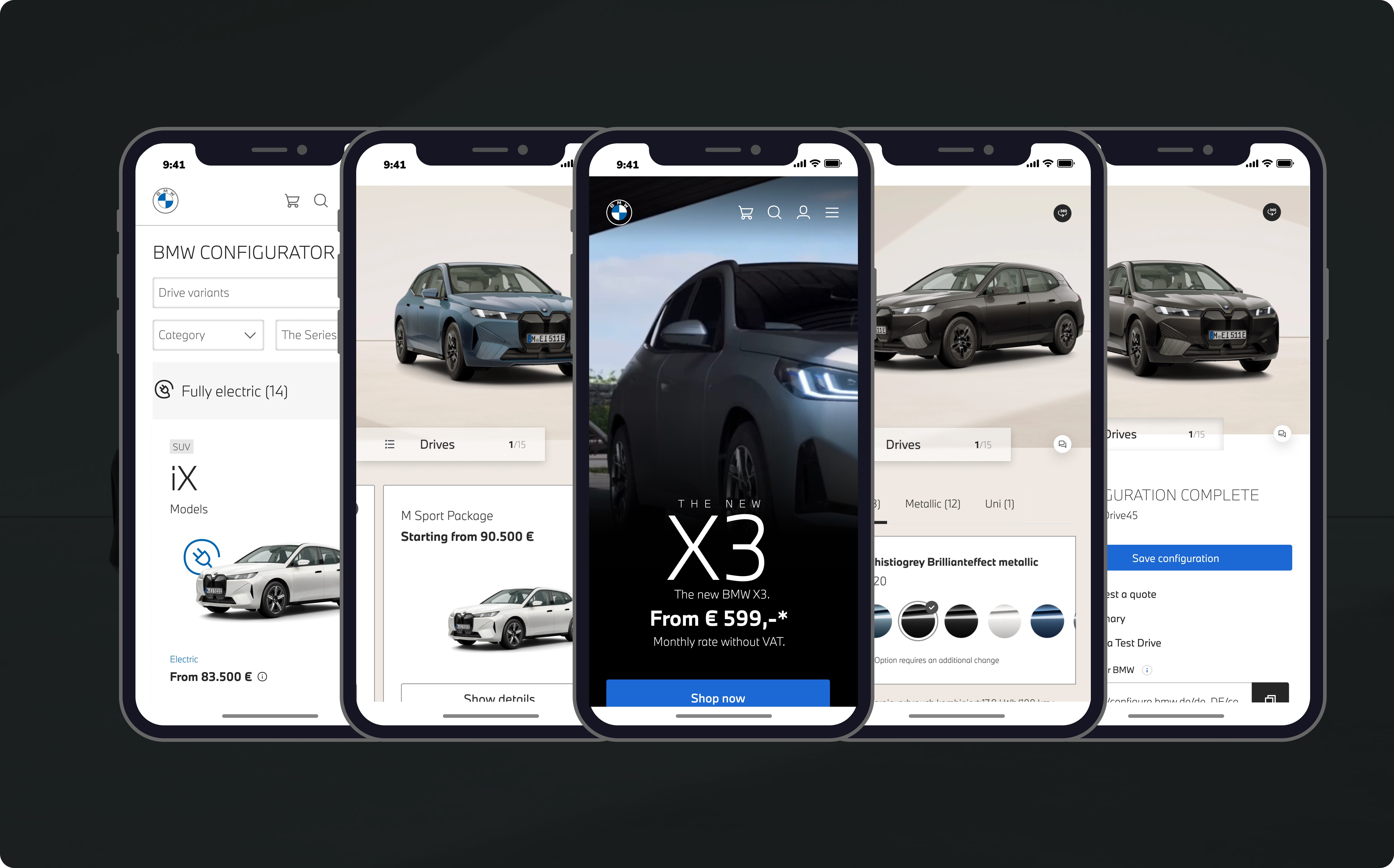
Turning 65% of browsers into buyers with BMW's Vehicle Configurator
Identified where and why users dropped off during configuration. Restructured the login flow and shipped two new features that removed the biggest friction point in the purchase journey.
B2C
BMW Group
automotive
2025
3 min read
01
The Problem
A product worth loving.
No way to buy it.
Every year, thousands of male sheep are overlooked and therefore discarded. This is because they don't mate with female sheep. Farmers therefore label them as "imperfect".
Rainbow Wool farmers saw something different: sheep with a story, wool with a purpose and a brand build around second chances.
The resources existed but no one was interested in purchasing it. Rainbow Wool had no online store, no e-commerce experience and no digital presence at all.
My job was to build one from nothing and build it in a way that matched the warmth, inclusivity and care that sat at the heart of the brand.
"The sheep were being discarded for being different. The store needed to feel like the opposite of that. A place where being different was the whole point."
"The sheep were being discarded for being different. The store needed to feel like the opposite of that. A place where being different was the whole point."
02
Competitor analysis
What the market was doing and
what it wasn't.
Before designing anything I ran a benchmark analysis across four comparable fashion e-commerce brands: Ucon Acrobatics, Jan N June, Hugo Boss, and Armedangels. I focused specifically on mobile navigation. Being the highest-friction point in any mobile shopping experience and documented four patterns that appeared consistently across all four brands.
Benchmark: Ucon Acrobatics, Jan N June, Hugo Boss, Armedangels — mobile navigation patterns and findings.
03
Strategic Insights
Three things research
made clear.
By aligning with the Service Plan Cologne Team on business and brand objectives early and synthesising the competitive audit into actionable opportunities, three insights shaped every design decision that followed
01. Story is the product
Customers don't just buy wool. They're buying into a mission. Every screen needed to carry the narrative of being more than just a product grid.
02. Inclusion had to be felt
Most "inclusive" brands declare it in their About page. Real inclusion lives in touch targets, contrast ratios and checkout clarity.
03. Warmth converts
Values-led shoppers are loyal, but only if the experience feels consistent with the brand's promise from homepage to order confirmation.
04
Brand Identity
A Visual language built around
celebration
I explored multiple visual directions and validated each for accessibility and emotional resonance. The chosen direction bold rainbow arc, high-contrast black wordmark and full spectrum palette. The TWK Burns typeface was the only one that matched the energy of the mission. Loud enough to celebrate. Structured enough to trust.
Brand system: primary logo, rainbow arc symbol, 7-colour palette, TWK Burns typeface, and photography direction — all validated for accessibility before any UI design began.
05
Wireframes
Structure before style.
Wireframes came before colour or branding by keeping focus on flow logic and accessibility. Four screens: home, collections, checkout, and order confirmation. The checkout was accessibility tested at wireframe stage.
06
Design System
One system.
Built from scratch as a single source of truth for design and development. Colour tokens, icons, components and multi-language support as we were launching in the USA too. WCAG AA compliant throughout.
07
Key Decisions
Three decisions that
defined the product.
Decision One: Story before selling "Adopt a Sheep" feature
We led with the sheep by placing their names, personalities and story before a single product grid. Customers could choose a specific sheep to support with their purchase, turning a transaction into a relationship.
Decision Two: Accessibility built into our checkout from the first wireframe
Labels above every field, logical grouping, persistent order summary, and a brand mission message in the order panel throughout. PayPal, Apple Pay, and card offered to reduce payment friction.
Decision Three: Warmth carried through to confirmation and packaging
The order confirmation was designed as a celebration, not a receipt. The design system extended into packaging mockups so the experience continued through to the unboxing moment.
08
Outcome
Zero to award winning.
0 - 1
Award
Clio industry innovation recognition
WCAG
AA Compliant system built in.
2 lang
English & German from day one.
Complete product from nothing.
Complete product from nothing.
Award
Clio industry innovation recognition
WCAG
AA Compliant system built in.
2 lang
English & German from day one.
09
Reflection
What I took away
Inclusive design isn't a feature, it's a decision you make at the beginning and defend all the way through to the packaging. Every decision here asked the same question: does this feel like it was made for everyone? That question is what won the award. It's also what made the product worth using.
Next Case Study
Next Case Study
Turning 65% of browsers into buyers with BMW's Vehicle Configurator
Identified where and why users dropped off during configuration. Restructured the login flow and shipped two new features that removed the biggest friction point in the purchase journey.
B2C
BMW Group
automotive
2025
Turning browsers into buyers with BMW's Vehicle Configurator spatial data processing
Identified where and why users dropped off during configuration. Restructured the login flow and shipped two new features that removed the biggest friction point in the purchase journey.
B2C
bmw gROUP
automotive
2025